

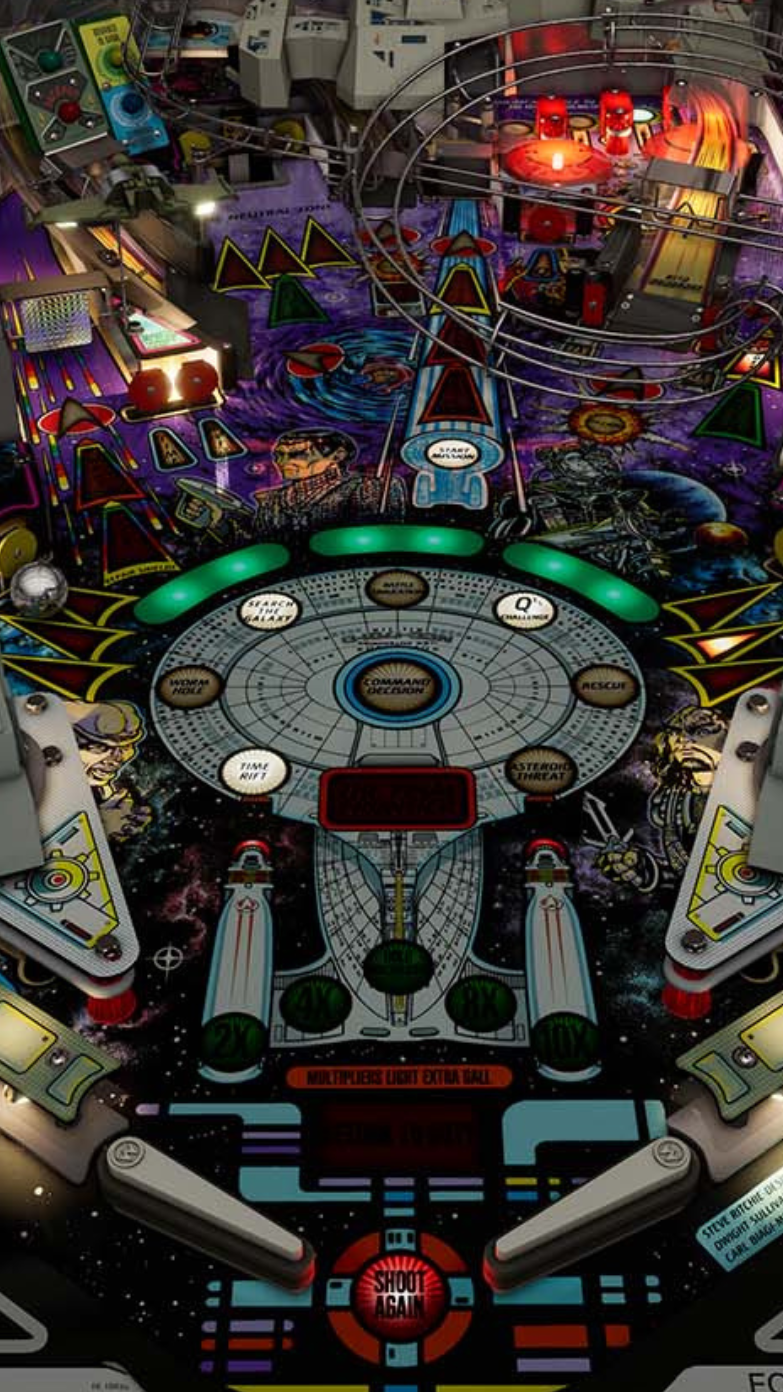


Williams™ Pinball Star Trek™: The Next Generation Legends Single Premium Pack (For Legends 4K™ Pinball ONLY)
.%20Not%20all%20tables%20run%20playfield%20in%20full%204K%20resolution.%0AIMPORTANT%20NOTES%20TO%20READ%20BEFORE%20YOU%20PURCHAS...
)
Product Description
NOTE: The 32" playfield on AtGames Legends 4K™ Pinball Machines supports resolutions up to 4K (2160p). Not all tables run playfield in full 4K resolution.
IMPORTANT NOTES TO READ BEFORE YOU PURCHASE: This Legends 4K™ Pinball Pack is compatible with all Legends Pinball 4K™ Family of products. This pack will be compatible with future AtGames Legends 4K™ devices.
Explore this table further with the release notes HERE, including Known Issues.
Check out Legends 4K™ Pinball Packs Code Redemption Process HERE.
Table Features:
- Warp through eight U.S.S. Enterprise-D Missions
- Enjoy the original music and voiceovers by eight cast members
- Fire Photon Torpedoes to defend the starship
- Get ahead of the competition with the Warp Speed ball delivery sequence
- Survive the Shuttle Simulation in the Holodeck
- Reach Warp Factor 9.9 for unique rewards
- Find secret modes hidden from the galaxy. Become an honorary Starfleet officer today!
Images are for reference only and actual product appearance and specifications may vary.
TM & © 2024 CBS Studios Inc. STAR TREK and all related marks and logos are trademarks of CBS Studios Inc. All Rights Reserved.
Game code © 2021-2024 Zen Studios Ltd. All Rights Reserved.
Product Warranty
Other Details
This product is rated 3.0 of 5.0 stars.
It has received 30 reviews.